Shopping Online3

  • Subscribe to our RSS feed.
  • Twitter
  • StumbleUpon
  • Reddit
  • Facebook
  • Digg
Showing posts with label Mobile. Show all posts

Tuesday, 19 November 2013

The increasing importance of a mobile-optimized experience

Posted on 09:00 by Unknown
We're squarely in a multi-screen world and people are using smartphones to search, shop and get things done more often than ever. That means delivering a great experience on mobile devices is increasingly important, since it affects organic visibility, Quality Score, ad position and cost, sales, and customer loyalty.

The mobile experience matters
Recent research conducted with Nielsen shows that 48% of mobile consumers start their purchase journey with paid and organic search results. With mobile ads, the quality of your mobile landing page experience directly affects how your ad ranks (including whether it's seen at all) and what you'll pay per click. Mobile site experience factors can also directly affect your organic search rankings.

Getting more mobile traffic and lower CPCs is great. But after the click, your mobile landing page experience is even more important for converting visits into sales and building customer loyalty. According to 2012 research on what users want most from mobile sites, 67% of consumers say that a mobile friendly site makes them more likely to buy, and 74% say they're more likely to return to that site in the future.

The experience of ProFlowers, a major US-based fresh flower retailer, confirms the benefits of offering a great experience on smaller screens. After launching its mobile-optimized site, Proflowers saw its conversion rate increase by 20-30%. It has also seen mobile contributing more to conversions that occur on other devices.
“Many users check us out on mobile, and then convert on our [traditional desktop] site... Regardless of where the final sale comes from, staying ahead in mobile is an invaluable part of our successful marketing and customer relationship strategies.”
- Leif Heikkila, senior director of online marketing, ProFlowers
Resources for making your site more mobile-friendly 
We think every business can succeed at providing a great mobile experience. Here are some resources to help:
  • Visit our new multi-screen home for resources and partners to help optimize your site for multiple screens. It's rich with web developer resources like the PageSpeed tool that analyzes your web site to provide code-level feedback on how to improve load times for a better mobile experience. 
  • You'll find more information on how to make sure your website is well indexed and mobile-friendly in our Google Developers site for webmasters.
  • For best practices and inspiring examples of winning mobile marketing strategies, please check out our recently updated Mobile Playbook. 

Posted by Adam Juda, Director of Ads Quality
Read More
Posted in Ads quality, Best practices, Mobile, Multi-Screen | No comments

Tuesday, 12 November 2013

Say Hello to Calls as Conversions in AdWords

Posted on 09:00 by Unknown
Recent research shows that 70% of mobile searchers have called a business directly from search results and that over 40 million calls from Google ads are made each month to advertisers around the world. It’s clear that calls are important to businesses -- and we want to help you measure them in AdWords.

We announced on October 1st that phone calls would soon be added as an important conversion type as part of AdWords. Starting today, phone calls from mobile click-to-call ads will be added to the regular Conversion columns, which enable them to be used with automated bidding solutions like Conversion Optimizer. These mobile call conversions are available in countries where Google forwarding numbers are available.1  In addition, calls made by customers from your mobile and desktop ads will be counted in your “Estimated Total Conversions,” a new column you can use to measure the full value you're getting from AdWords.

Calls as conversions are counted based on the aggregate number of calls generated by your ads and the duration of the phone calls. This is the same type of reporting that we have been providing on calls for several years.

Success with calls as conversions in AdWords

Businesses using AdWords have found that adding  phone numbers to their ads is an important way to connect with customers and drive incremental sales. Learn more.

Room & Board, a home furnishings retailer, uses call extensions and call conversions to track interest in their brand:
”Since we have implemented call extensions, we have seen nearly 30% of our total conversions come from phone calls. We want our customers to connect with us in the way they prefer. Call extensions and call conversions give us that ability and allow us to measure results at the same time."
Improve your performance with automated bidding

Previously, calls were counted in their own column called “Phone Call Conversions.” Now, call conversions from mobile ads are counted in the regular Conversion columns, so you can use free automated bidding tools like Target CPA to improve performance and save time.

Understand the full value of your advertising

Online ads can help drive conversions beyond a purchase made directly on your website. Adding calls to the Estimated Total Conversions column gives you a more holistic view of how your keywords drive those conversions, so you can set bids and budgets that more fully reflect the value you're getting from AdWords.

For a more in-depth product walkthrough of Estimated Total Conversions, calls as conversions, and a review of best practices, join us for a webinar tomorrow, November 13th at 10am PT. You can sign up here.

Posted by Anurag Agrawal, Product Manager, Calls


1 US, UK, Germany, France. Previously, these mobile conversions were in the “Phone Call Conversions” column
Read More
Posted in Conversion Tracking, Extensions, Mobile, Updates, Webinars | No comments

Tuesday, 5 November 2013

Consumers’ Mobile Path to Purchase: 5 key findings

Posted on 12:00 by Unknown
In this constantly connected world, people use their smartphones throughout the day to find information, shop, and stay connected. We commissioned Nielsen to conduct a study of smartphone users who recently made a purchase to better understand the role of mobile in the research and shopping process. Through a combination of surveys and metered data of actual mobile consumer behavior, we uncovered five key findings:
  1. Consumers spend time researching on mobile: Consumers spend 15+ hours per week researching on mobile sites and apps. They visit websites 6 times on average in the purchase process.
  2. Mobile research begins with search: 48% of consumers start mobile shopping-related research using search engines, more than they start on branded apps or websites.
  3. Location proximity matters: 69% of consumers expect a business to be within 5 miles of where they’re located.
  4. Purchase immediacy is key: 55% of consumers want to purchase within an hour, 83% within a day.
  5. Mobile influences purchases across channels: Of those who made a purchase and researched on their phones, 82% purchased in-store, 45% bought online (desktop/tablet) and 17% purchased on mobile.
With smartphone penetration in the US nearly doubling year-over-year from 31% to 56%1, it’s clear that the mobile savvy shopper is here to stay.

Key Implications
Below are ways that advertisers can use these insights to better reach the mobile consumer and drive more business:

Ensure you have a mobile-optimized site
Consumers expect a business to have a mobile-friendly website. To create a mobile-optimized experience, you’ll want to start by analyzing how your consumers currently interact with your website, what they’re looking for, where they’re visiting from, etc. These insights will provide hints for creating a mobile website that meets your consumers’ needs. For more information on building sites that are optimized for mobile and other devices, check out these resources.

Tailor your search ads for the mobile shopper
As search is the most common starting point for mobile shopping research, it's important to have mobile ads running so you'll be there when consumers are looking for you. You can help consumers get the information they need by designing your search ads with mobile-preferred creatives, such as “Call now” or “Visit our mobile site.”

Use location extensions so consumers can find you
Location extensions allow you to attach your business address to your ads, which lets consumers know how close they are to your business and provides directions for consumers to get to your store.

Facilitate faster checkouts
Showing local in-stock inventory with local PLAs, enabling click to call and building fast, seamless mobile checkout experiences with tools like Google Wallet Instant Buy are several ways advertisers can help consumers complete their purchases quickly.

Measure conversions across channels with cross-device conversion tracking
Consumers purchase across channels, often times starting their research on mobile, then buying in-store or on their computers. Advertisers can better understand how mobile ads drive purchases by using estimated cross-device conversion to measure conversions that start from mobile research.

To explore more of the findings from the Mobile Path to Purchase research, view the full presentation at the Think with Google site.

Posted by Bao Lam, Performance Ads Product Marketing Manager

1 Google & Ipsos Our Mobile Planet, 2011-2013↩
Read More
Posted in Mobile, Multi-Screen | No comments

Wednesday, 9 October 2013

Best practices for succeeding with mobile

Posted on 06:00 by Unknown
New Mobile Playbook offers blueprint for winning over the constantly connected consumer

Consumers continue to embrace smartphones and constant connectivity at breakneck speed. Over the past two years, smartphone penetration in the US nearly doubled from 31% to 56%1 while smartphones as a percentage of new handset sales have surged from 50% to 85%.2

As people continue to make their smartphones a central part of their everyday lives, marketers have increasingly woken up to this consumer reality, but many still struggle with how to focus their efforts. To address this, we released The Mobile Playbook last year to help marketers better understand how they can win with mobile. And just as the industry has changed over the last year, we know that the best practices and considerations for winning in mobile have evolved too, which is why we’re relaunching The Mobile Playbook today.
We’ve spoken to hundreds of marketers to understand what mobile areas they still struggle with, talked with leaders from around the industry, and searched high and low for the best examples of businesses that have succeeded in creating great mobile experiences.

The Mobile Playbook outlines five questions every business should address when it comes to developing successful mobile strategies:
  • How does mobile change our value proposition?
  • How does mobile impact our digital destinations?
  • Is our organization adapting to mobile?
  • How should our marketing and attribution adapt to mobile?
  • How can we connect with multi-screening audiences?
The second edition also dives deeper into areas of concern for today’s advertisers, like:
  • How to address the showrooming challenge head on.
    Industry veteran Michael Scharff shares strategies on how retailers can address showrooming, where mobile consumers use physical stores to check out products in person but end up buying them online or somewhere else. Scharff touches upon strategies such as selective price-matching and ideas on how to enhance the in-store experience for mobile consumers.
  • The age-old question of when to build a mobile website and when to build a mobile app.
    A mobile site is still the #1 priority. Advanced marketers are now taking a step further by tapping into the full potential of apps to deepen customer relationships and drive repeat sales or customer loyalty.
  • What it really means to build multi-screen marketing campaigns.
    84% of all multi-screen shopping experiences involve mobile, and most of these interactions start on a mobile device.3 Marketers now need to see mobile as the first screen when it comes to integrated, multi-screen campaigns. Brands like American Apparel and My M&Ms share how they made mobile core to their broader digital marketing efforts.
  • How marketers can really understand the full value of their mobile efforts across devices, calls and in stores.
    Marketers now are realizing that mobile doesn’t have a conversion problem, but a measurement problem. We’re seeing more examples of companies, like Myntra, adidas and Extra Space Storage, identify and measure all of the ways that mobile is driving value for their businesses and building new attribution models to make sure they’re investing correctly in mobile.
The new Mobile Playbook is now available from Google’s Think Insights site. We hope that the playbook will give marketers more tools and insights on how to succeed in mobile, especially as we enter the holiday shopping season. In the coming months, we’ll also post new articles on Google’s Think Insights, going deeper on mobile best practices and examples of companies who are leading the way.

Posted by Jason Spero, Director of Global Performance Solutions

1 Google & Ipsos Our Mobile Planet, 2011-2013
2 Mary Meeker Internet Trends Presentation 2013
3 Google & Ipsos Multi-screen Consumer Research, 2012
Read More
Posted in Best practices, Mobile, Multi-Screen | No comments

Tuesday, 24 September 2013

New research shows that 70% of mobile searchers call a business directly from search results

Posted on 09:00 by Unknown
E-commerce continues to grow quickly with people shopping across a variety of devices, but often times there is no comparison to talking with a live person. Phone calls are still an important channel for research and purchasing, with 70% of mobile searchers reporting they click to call directly from the search results to connect with a business. In fact, Google ads drive over 40 million calls each month. As a critical component of today’s digital path to purchase, it’s important for businesses to understand how, when, and why consumers use click to call features.

Click image to enlarge

Working with Ipsos Research, we surveyed 3,000 mobile searchers who had recently made purchases across different industries to understand the role that click to call - from paid or organic search results - played in the purchase process. We found that calls are not only an important channel for research and transaction, but also the presence of a phone number in search results can strongly influence the perception of a business’s brand.

Click to call is important to consumers across all verticals.

Across all seven of the verticals we researched (Travel, Restaurant, Auto, Local Services, Retail, Finance, Technology) click to call was an important feature for people looking to find information and make purchases.

  • 62% of consumers searching for auto parts and services would be very likely to use click to call, and 57% would use click to call to compare pricing.
  • 60% of those searching for car rental information on their phone would use click to call, and 44% would call to make a reservation.
  • Within local services, 76% would use call features to schedule an appointment for professional services.
  • 61% of people searching for financial services on their smartphones are likely to use click to call to make changes to their bank accounts. 

Consumers rely on calls for research and transacting.

We broke down the purchase process into its component phases - Inspiration, Research, Purchase, and Post Purchase Experience – to see when consumers are most likely to call a business. We found that calling is most important during the research and purchase phases, where 52% and 61% of mobile searchers respectively say it’s important to have the ability to call. This means that a large number of calls happen when someone is ready to buy or helps a consumer move closer in purchase consideration.

Calls originating from the search results page are valuable for businesses. 

88% of mobile searchers indicated that the length of the call is important to them, so we took a look at our our own internal data and found that almost 3 out 4 calls resulting from mobile search ads lasted longer than 30 seconds, and that calls from ads lasted on average six minutes. This suggests that the majority of calls generated by mobile search ads are not quick informational calls, but instead are more substantive research or transactional calls.

Adding click to call can also boost the effectiveness of your ad, whether it's because users feel more confident in your business or because of the larger ad size due to the call button. On average, AdWords advertisers that implement click to call see an increase of 8% in the click through rates of their ads.

The call button influences brand perception.

The ability to call a business directly from the search results not only helps to drive purchase, but is also an important factor in brand perception. Nearly half of mobile searchers, indicated that the lack of a call option would lead them to be both frustrated with the business and more likely to turn to another brand. Additionally, 33% said that they would be less likely to refer the brand to others and would be less likely to use the brand in the future.

IMPLICATIONS

It’s clear from our findings that driving phone calls should still be a priority for businesses in every industry. Businesses can easily help mobile searchers get in touch by attaching call extensions to their mobile search ads. While the presence of the call button in organic results depends on a number of factors, you can schedule your mobile search ads and call extensions to show only at relevant times or only in specific searches. Advertisers can also view call specific reporting metrics from their call extensions to identify areas to further optimize performance.

Additionally, businesses should measure and assign value to the calls driven by their advertising. With AdWords, businesses can now measure calls as conversions, allowing them to assign value to calls that their ads drive.

To explore more of the findings from our calls research visit the Think with Google site or click here to learn how to get started with call extensions now.

Posted by Adam Grunewald, Mobile Marketing Manager


Read More
Posted in Mobile, Multi-Screen | No comments

Thursday, 22 August 2013

Capturing the mobile opportunity - being present and bidding well

Posted on 07:00 by Unknown
This year, for the first time, the majority of people in the US own a smartphone.1  This means that more people than ever are constantly connected, using their phones throughout the day to search for information, shop, or stay entertained.  As a result, we are seeing growth in mobile searches across many verticals.  For example, year on year, we have seen mobile searches grow by 117% for entertainment, 91% for auto and 90% for finance. And for seasonal terms like “back to school,” we saw a 96% year on year increase.

As mobile continues to grow, it's more important than ever for every business to understand how to engage their customers on mobile. For advertisers who are just getting started, make sure you are showing up when potential customers are searching for keywords related to your business.  Opt into mobile and set a mobile bid adjustment that meets your business goals.  By using mobile bid adjustments, you can influence your ad position, clicks and cost on mobile devices.  For a bit of perspective, here are a few of examples of how advertisers have set their mobile bids as a percentage of desktop within the last several months (actual CPCs may vary):

  • On average, advertisers in the Japan finance sector set mobile bids to 117% of desktop.
  • On average, advertisers in the US dining and entertainment sector set mobile bids to 90% of desktop.
  • On average, advertisers in the Canadian auto sector set mobile bids to 87% of desktop.

An example of a marketer who has recognized the importance of mobile and created a clear strategy is My M&M’s.  In this video, the My M&M’s team notes that mobile is often the entry point for their customers.  Even though the final conversion may happen in the store or on another device, it’s been important for My M&Ms to make sure they are on mobile to capture these leads.  After optimizing their search and display campaigns, MyM&M’s reported a 15% increase in overall ROI.

For best practices on how to set your mobile bid adjustment, we encourage you to review our bidding best practices whitepaper which includes a chapter dedicated to mobile bids.  You can also use the full value of mobile calculator to estimate the overall value that mobile drives for your business.  People are using mobile for many kinds of activities across all business types.  Mobile is where your customers are, whether you are a restaurant owner, retailer or financial institution.  Therefore, it’s more important than ever before to make sure that your message is where people are looking.

Posted by Andy Miller, Head of Global Mobile Search Solutions

1 PEW Research Center, May 2013.  http://pewinternet.org/Reports/2013/Smartphone-Ownership-2013/Findings.aspx
Read More
Posted in Best practices, Bidding, Mobile, Multi-Screen | No comments

Monday, 22 July 2013

Stepping into the future together

Posted on 09:00 by Unknown
Our two most important goals for AdWords are to make ads more relevant and useful for users, and more effective and simple to manage for advertisers. That's why I was so excited to announce enhanced campaigns this past February. With enhanced campaigns, we're making it easier to reach people in the moments that matter with ads that are more relevant to their intent and context.

We’ve written a lot about enhanced campaigns in the past four months.  In addition to our help center articles and dedicated website, you can see lots of best practices, customer stories, webinar recordings and details about new features in the “enhanced campaigns” label on our blog.

Since we introduced enhanced campaigns, advertisers have upgraded over 6 million legacy campaigns, representing almost 75% of active campaigns. And starting today, we will begin upgrading all remaining campaigns automatically, bringing everyone onto the new AdWords platform. As with many product launches, the rollout will be gradually completed over several weeks.

Results with enhanced campaigns
Many advertisers who've upgraded and optimized their enhanced campaigns have already reported positive results and time savings. Here are a few recent examples:
  • Pizza Hut reported that mobile ROI increased by 20% since upgrading to enhanced campaigns. They've also found that mobile CTR has increased by more than 60% while their cost per order on smartphones has dropped by 17%.
  • Autobytel, a site for car buyers and owners, grew conversions by 10% at the same CPA after upgrading and optimizing their enhanced campaigns. They now manage 30% fewer campaigns, leaving the marketing team with more time to focus on optimizing the user experience. “We are getting the right conversions at the right price, while marketing efforts are more focused on user experience rather than managing the account,” said Billy Ferriolo, Senior Vice President, Consumer Acquisition and Product Development. (download .pdf)
  • Miller's Bakery, a thriving family-run business in New Jersey, generated more custom cake orders using features like location and mobile bid adjustments, upgraded sitelinks, and upgraded call extensions. After upgrading, the bakery’s in-store visits increased by 10-20%, business during peak hours nearly doubled, and web clicks from nearby cities climbed 20-35%. “Our customers interact with our business using multiple screens,” said owner Dwight Miller. "If we didn’t advertise on both desktop and mobile, we’d miss out on a lot of customer touch points.” (download .pdf) 
Tips for success after upgrading
All AdWords campaigns benefit from good set-up and regular optimization. So whether you upgraded your campaigns yourself or let it happen automatically, we encourage you to review and optimize all newly transitioned enhanced campaigns. Here are a few tips (details are in this Help Center article):
  1. Review your mobile bid adjustments. For most campaign types, the auto-upgrade default is based on bids from similar advertisers. Visit the campaign ‘Settings’ tab to optimize for your business. 
  2. Identify unwanted keyword duplication in overlapping campaigns. If you previously had similar legacy campaigns for each device type, we suggest identifying matching campaigns and eliminating unwanted duplicate keywords in your enhanced campaigns.
  3. Review Display Network campaigns. Verify that your display ads are reaching users on desired devices and that you're using your desired bidding strategies.
  4. Start taking advantage of the powerful enhanced campaign features. We recommend trying out upgraded sitelinks and upgraded call extensions to start. Then you can further boost results by creating mobile preferred ads and setting bid adjustments for location and time.
You can visit our enhanced campaigns website for more success stories and best practices, including a guide on how to bid like a pro with enhanced campaigns. And please contact us if you have questions or need help.

Stepping into the future together
Consumers will continue to have access to more screens and be able to switch between them as they shop, play and communicate. Enhanced campaigns are an important step towards helping advertisers connect with consumers more simply and smartly in this multi-screen world. We've been inspired by advertisers and partners around the world who are already embracing this new opportunity. Thank you for joining us on the journey and stepping into the future together.

Posted by Sridhar Ramaswamy, Senior Vice President, Ads and Commerce
Read More
Posted in enhanced campaigns, Mobile, Multi-Screen, Updates | No comments

Tuesday, 16 July 2013

New research shows that 88% of ad clicks from mobile search are incremental to organic clicks

Posted on 09:00 by Unknown
This year, for the first time, the majority of people in the US (56%1) own a smartphone.  In this constantly connected world, people use mobile search throughout the day to find information, shop, and stay connected.  Businesses, therefore, are making mobile a central part of their business and marketing strategy: from building better websites across screens to optimizing mobile ads.  When speaking with advertisers we often hear questions like “What would happen to my organic clicks if my mobile search ads were paused?” They want to know how much of a role their ads play in driving people to their website.

In 2011, we ran the “Search Ads Pause Studies,” and learned that an average of 89% of clicks on search ads are incremental - meaning that this traffic is not replaced by organic clicks when ads are paused, and therefore is missed.

This year, we carried out the same studies on mobile search and learned that 88% of site visitors driven by mobile search ads would not otherwise click on the business’s organic listing when ads are paused. From March 2012 - April 2013, we conducted Mobile Search Ads Pause studies on more than 300 US AdWords accounts from 12 key verticals. The research focused on search terms that had an organic listing on the first page and adjusted for factors like seasonality. Similar to our previous study of search ads across all devices, we found that an average of 88% of clicks generated by mobile ads were incremental.

Results were consistently high across all verticals: 97% of mobile ads clicks are incremental for classified and local advertisers, 86% for retail advertisers, and 90% for technology brands, just to name a few.  Today consumers use mobile search to connect with businesses across a wide variety of industries and trust both organic and paid results to help accomplish their goals. The infographic below shows the percentages across all 12 verticals.

Click here to enlarge

Mobile ads can help consumers connect with all types of businesses. This study continues to show the importance of advertising on mobile whether you are a restaurant owner, a sporting goods retailer or automobile brand.  People are searching all the time, across devices.  Therefore, it’s more important than ever before to make sure that your message is where people are looking. AdWords enhanced campaigns makes this easy for advertisers.  By upgrading to enhanced campaigns, advertisers can effectively reach consumers using mobile devices based on contextual signals like their location and time of day.

Posted by Andy Miller, Head of Global Mobile Search Solutions

1Our Mobile Planet 2013
Read More
Posted in enhanced campaigns, Mobile, Multi-Screen, research | No comments

Tuesday, 9 July 2013

Introducing the Google Databoard: A new way to explore research

Posted on 08:27 by Unknown
It’s important for businesses to stay up to date about the most recent research and insights related to their industry. Unfortunately -- with so many new studies and with data being updated so often -- it can difficult to keep up. To make life a bit easier, we created the Databoard for Research Insights, which allows people to explore and interact with some of Google’s recent research in a unique and immersive way.


The Databoard is our response to three big challenges facing the vast majority of research released today.
  1. Ease of consumption: The databoard introduces a new way of sharing data, with all of the information presented in a simple and beautiful way. Users can explore an entire study or jump straight to the topics or datapoints that they care about. The Databoard is also optimized for all devices so you can comfortably explore the research on your computer, tablet, or smartphone.
  2. Shareability: Most people, when they find a compelling piece of data, want to share it! Whether its with a colleague, client, or a community on a blog or social network, compelling insights and data are meant to be shared. The databoard is designed for shareability, allowing users to share individual charts and insights or collections of data with anyone through email or social networks.
  3. A cohesive story: Most research studies set out to answer a specific question, like how people use their smartphones in store, or how a specific type of consumer shops. This means that businesses need to look across multiple pieces of research to craft a comprehensive business or marketing strategy. To address this need, the Databoard allows users to curate a customized infographic out of the charts or data points you find important across multiple Google research studies. Creating an infographic is quick and easy, and you can share the finished product with your friends or colleagues.
The databoard is currently home to four research studies including The New Multi-screen World, Mobile In-store shopper research, Mobile search moments, and more. New studies will be added frequently so be sure to check back often. To get started exploring the Databoard and creating your own infographic visit google.com/think/databoard.

Posted by Adam Grunewald, Mobile Marketing Manager

Read More
Posted in Mobile, Multi-Screen, research | No comments

Thursday, 23 May 2013

Bidding Best Practices (Part 3) - Calculating mobile bid adjustments

Posted on 07:09 by Unknown
Today’s post about calculating mobile bid adjustments is the third in a bidding best practices series. The previous post covered improving your results with location bid adjustments.

People are now constantly connected and switching seamlessly between devices. In fact, more than 38% of our daily media interactions occur on mobile1. This presents advertisers with new opportunities to reach customers anytime, anyplace, on any device. At Google, we want to help you capitalize on these opportunities and develop new strategies for your business to win on mobile.

Mobile bid adjustments in AdWords enhanced campaigns give advertisers the power to optimize bids across devices — all from a single campaign. In today’s post, we’ll help you understand how to calculate a mobile bid adjustment that accounts for the total conversion value your mobile ads drive for your business.

Review your current desktop and mobile performance
Before calculating your mobile bid adjustment, you can run an AdWords report to review your current desktop and mobile performance. While online conversions, app downloads, and calls are easy to track in AdWords, other conversions such as in-store visits may be harder to attribute directly to your ads. For those conversions, you may need to estimate their value. The closer you can estimate the value of these conversions, the more optimized your bid will be on mobile.

Calculate your mobile bid adjustment
The key to optimizing your mobile bid adjustment is to identify the ratio of mobile vs desktop (and tablet) conversion value. This is calculated by dividing your value per click on mobile by your value per click on desktop.


We’ll illustrate this calculation using the table below. Let’s say this data belongs to a national retailer with mobile and desktop websites as well as physical stores. In the past month, this retailer saw 10,000 clicks from her mobile ads and 10,000 clicks from her desktop and tablet ads.  Her mobile ads drove $900 of revenue from phone calls to her stores, $5,000 from online sales and $5,000 from in-store visits for a total of $10,900. During this same month, her desktop and tablet ads drove $100 of revenue from calls, $10,000 from online sales, and $2,000 from in-store visits for a total of $12,100.

Click to enlarge image

With this information, the retailer calculates the value per click (for mobile and desktop) by dividing the total value (i.e., the total revenue from all conversion types) by the total number of clicks, respectively. In this case, the mobile value per click is $1.09 and the desktop value per click is $1.21.

The retailer’s mobile bid adjustment is the ratio of these two values: she divides the value per click on mobile by the value per click on desktop and then subtracts 1. In this case we have (1.09/1.21) - 1, or a -10% mobile bid adjustment that can be entered into AdWords.

Iterate and test
As with all online marketing techniques, mobile bid adjustments aren’t something you should just “set and forget.” Frequent iteration and testing will help you account for changes in seasonality or business operations.  Due to varying screen sizes on mobile, we also recommend that you keep a close eye on your mobile impression share so that your ads show in the top positions.

Learn more
To learn more about mobile bid adjustments, visit the AdWords Help Center or watch this recording of this hangout on air, “Enhanced Campaigns: Optimizing Mobile Strategy.”

To use mobile bid adjustments, you’ll need to upgrade your campaigns to enhanced campaigns. Starting on July 22, 2013, we will begin automatically upgrading all campaigns.

Next week, we’ll dive deeper into ways you can use tools like conversion optimizer and eCPC to automate your bid settings based on specific business goals like ROI.

Posted by Andy Miller, Head of Mobile Search Solutions

1http://www.google.com/think/research-studies/the-new-multi-screen-world-study.html
Read More
Posted in Best practices, Bidding, enhanced campaigns, Mobile, Multi-Screen, Optimization | No comments

Tuesday, 14 May 2013

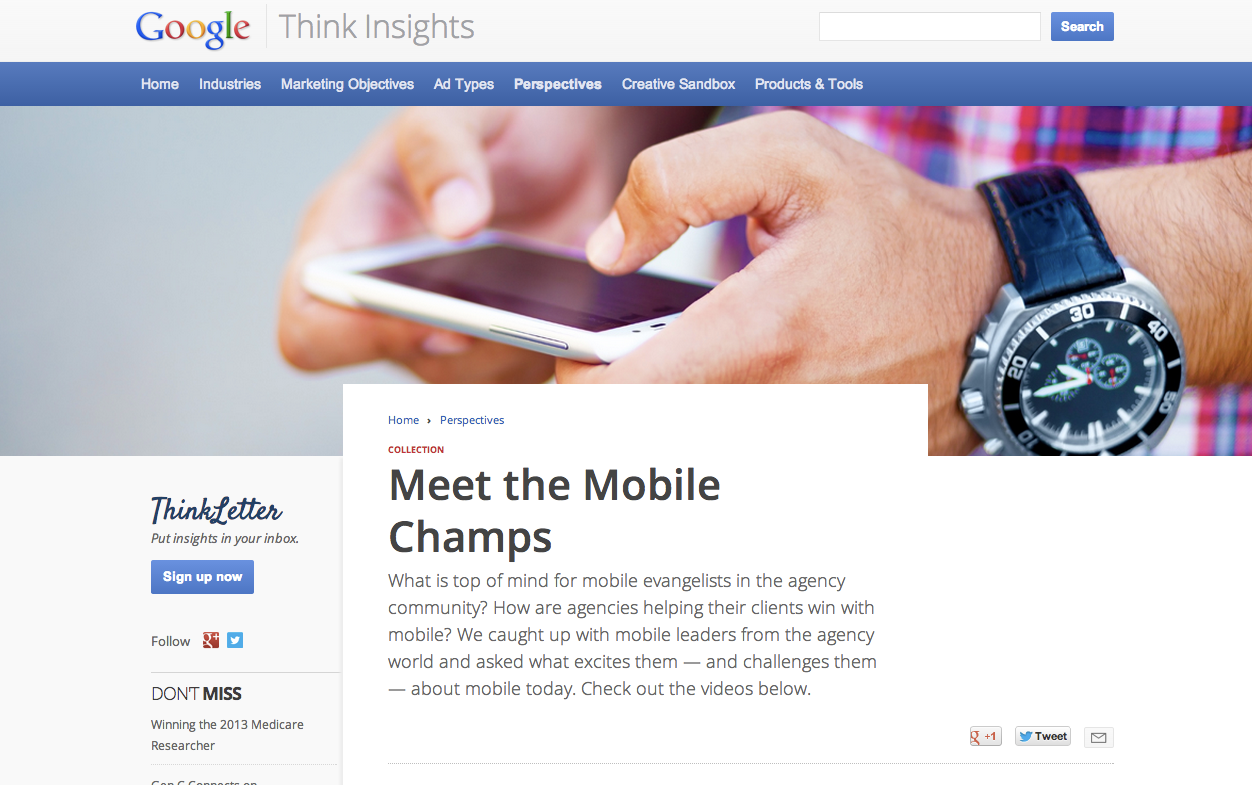
Meet the Mobile Champs: Introducing a new series of video interviews with mobile thought leaders

Posted on 08:49 by Unknown
What is top of mind for mobile leaders in the agency community?  How are agencies helping their clients win with mobile?  In an effort to better understand the challenges that agencies face when it comes to mobile, and to strengthen our efforts to help them tackle and overcome these challenges, we decided to bring together a group of mobile evangelists from the agency world.  At a recent event in New York City, we asked a few of these mobile leaders what excites them - and what challenges them - about mobile today.  Today, we are excited to share these interviews with you on Think Insights, Google’s hub for marketing insights and inspiration for advertisers and agencies. 


One of the topics that we found to be top of mind for everyone is the challenge of mobile measurement in a multi-screen world.  "We need to get beyond the old metrics of the Internet, television and print, and define what the new metrics are for mobile engagement," shared Jeffery Hinz, Managing Partner & US Digital Director at MediaCom.  Zach Morrison, VP & Director of SEM at Elite SEM, outlines the so-called "holy grail" of understanding consumer behavior across multiple devices to see the full customer journey.  As Morrison says, "The first thing people do in the morning is wake up and grab their phones and the last thing they do at night is do something on their tablet - I think the next biggest thing is tying it all together."

We also spoke with our mobile champs about topics ranging from brand building strategies to showrooming to where they think mobile is headed next.  Be sure to check out the full interviews on Think Insights.  We hope you will find what these mobile thought leaders had to say as interesting and thought-provoking as we did.

Posted by: Samantha Podos Nowak, Product Marketing Manager, Mobile Ads
Read More
Posted in Mobile, Multi-Screen | No comments

Thursday, 9 May 2013

Understanding smartphone use in stores: Shoppers who use mobile more, spend more in store

Posted on 07:22 by Unknown
Smartphones are our constant shopping companions - helping us research, compare, and even purchase products online and in stores. We’ve already seen that smartphones are key to pre-purchase activities. With 84% of mobile shoppers now using their phones to help with shopping in physical stores, smartphones are now as commonplace in stores as shopping carts and cash registers. In “Mobile In-Store Research: How in-store shoppers are using mobile devices”, with the help of M.A.R.C. Research and the Google Shopper Council, we set out to understand mobile’s role in stores and how marketers can take advantage. We found that across the board, shoppers who use mobile more actually spend more in store, so marketers should face the mobile in-store challenge head on and own the digital shelf.


Smartphones are transforming the retail experience
Now that consumers have product details, price comparisons and reviews available instantly at their fingertips, shoppers complement what they’re seeing on store shelves with what they can find on the web. This behavior isn’t just limited to high consideration purchases like appliances and electronics. In every industry we looked at, including household items, apparel, and pet care, more than 70% of smartphone shoppers use their phones in store to help with shopping. In fact, two-thirds of baby product shoppers compare prices on their phones in-store.

So what are shoppers using their smartphones for in stores? The research showed that phones were primarily used for:
  • Price comparison (53%)
  • Finding offers and promotions (39%)
  • Finding locations of other stores (36%)
  • Finding hours (35%)

Shoppers who use mobile more, spend more in store
While many businesses might assume that smartphone use in store drives shoppers to seek better prices elsewhere and order online, we found that the opposite was true. We compared the in-store purchases of moderate and frequent smartphone users and found that basket sizes of frequent mobile shoppers were 25-50% higher. For instance, while the average appliance smartphone shoppers spends $250 per shopping trip, frequent smartphone shoppers spend $350. Marketers shouldn’t shy away from the showrooming challenge, and should instead, meet it head on.

Search is often the starting point for in-store mobile activity
While many marketers assume that smartphone shoppers use shopping apps or navigate directly to brand and retail websites while in a store, we found that 82% of smartphone shoppers use mobile search to help make purchase decisions. This represents a critical moment where businesses can win or lose customers - whether they’re navigating the aisle in your store or your competitor’s. Mobile shoppers are looking for information or savings in the key decision moments, so businesses should own the digital shelf by making sure they’re present when customers are searching and that relevant information is easy to find.

Understanding how mobile changes the retail game
For businesses, this new mobile behavior doesn’t just impact your marketing efforts, it also has clear implications for the entire business - from the products you stock on shelves to the way you train employees. For instance, 1 in 3 smartphone shoppers would rather find information using their smartphone than ask a store employee. In categories like electronics and appliances, this behavior occurs for close to 50% of smartphone shoppers.

However, understanding and embracing this new retail behavior can open up new opportunities for brands to connect with customers in key consideration moments. Some stores promote their expanded inventory online or implement a price match guarantee to retain savings-hungry shoppers. Others are putting smartphones to use with QR codes that share more information about products, or apps with store maps and real-time inventory. Whatever tactics marketers choose, it’s clear that smartphones are changing the in-store experience, and that winning the key decision moments at the physical shelves means owning the digital shelves too.

Check out the full research report to learn more or register now for a webinar on Thursday, May 16 where we’ll discuss the research and how businesses can take advantage of mobile use in stores.

Posted by Adam Grunewald, Product Marketing Manager, Mobile Ads
Read More
Posted in Mobile, Multi-Screen | No comments

Tuesday, 23 April 2013

Upgrade to enhanced campaigns more easily with the new AdWords upgrade center

Posted on 09:03 by Unknown
Enhanced campaigns help you reach people with the right ads based on their context - including location, time of day and device - without having to set up and manage several separate campaigns. For most advertisers, upgrading is a simple 3-step process. Already, advertisers have upgraded more than 1.5 million campaigns and seen strong results.

New upgrade center

Today we're introducing the upgrade center to make upgrading easier for advertisers with lots of campaigns. With the upgrade center, you can upgrade several campaigns at a time and merge campaigns together with just a few clicks. As the upgrade center rolls out to all accounts over the next few weeks, you can access it from the left-hand nav bar on the Campaigns tab. Learn more.


Upgrade center entry point

There are two basic ways to use the upgrade center.

1. Bulk upgrade

This option provides a fast way to upgrade multiple campaigns that don’t need to be merged. Rather than upgrade campaigns one at a time, you can select several campaigns, choose a mobile bid adjustment, view traffic estimates, and upgrade with fewer clicks.

2. Merge and upgrade

If you have search-only or search+display campaigns that have similar keywords and location targets, the upgrade center automatically identifies them as candidates to merge. You’ll then be able to preview and adjust the proposed campaign settings, ad groups, and extensions for the merged campaign. By default, ad groups and budgets will be combined. Other campaign level settings and extensions in the Primary campaign will override those in the Secondary campaign.


Table view of merged campaign settings

After creating new enhanced campaigns, we recommend upgrading your extensions for more control, flexibility and relevance. You may also want to add back any important keywords, negatives, extensions, or location targets from your Secondary campaign which were left behind in the merge.

We recommend upgrading display-only campaigns rather than merging them together. The upgrade tool doesn't support the ability to merge image ads, audience targeting criteria, and other display-specific campaign elements.

There’s also an advanced mode in the upgrade center, which provides a view of all of the campaigns in your account, providing more flexibility and less guidance if you’ve already developed a strategy for how to merge and upgrade.

Reminders
Starting on July 22, 2013, we will begin upgrading all campaigns to enhanced campaigns.  As you’re upgrading to enhanced campaigns, please continue to share your feedback using our feedback form.

To learn more about strategies for upgrading to enhanced campaigns and the upgrade center, please join us today at 10:00 a.m. PDT at our Learn with Google webinar.

Posted by Neil Inala, Product Manager, AdWords
Read More
Posted in Display, enhanced campaigns, Mobile, Multi-Screen, Updates | No comments

Monday, 22 April 2013

Enhanced campaigns improvements for Google+ and mobile apps

Posted on 09:04 by Unknown
People are constantly connected and are moving between devices throughout the day to shop, connect and stay entertained. This creates great opportunities for advertisers to use context – like location, time of day, and device – to show the right ad and bid more efficiently.  In February, we launched enhanced campaigns to help you reach people with ads based on their context as well as their intent. Since then, advertisers have already upgraded over 1.5 million campaigns and have shared many success stories.

We’ve also continued to build new features on the enhanced campaigns foundation.  Today, we are introducing two additions.

Enhanced campaigns and social annotations

People are looking for relevant information, and sometimes the most helpful signals are recommendations from people who know a brand or business well.  Social annotations in AdWords show endorsements from people following your Google+ page on your search ads.  Many businesses such as Red Bull, National Geographic and H&M are using social annotations as part of their broader Google+ strategy.  On average, search ads with social annotations have a 5-10% higher click-through rate.


Starting today, enhanced campaigns will include social annotations when they can improve ad performance, without additional edits to campaign settings.  All you need is a Google+ page with a significant number of followers and a linked website that matches the URL in your search ads.  Learn more about how this works.

Social annotations on AdWords work hand-in-hand with your Google+ page to build community, conversation and engagement with your business on Google.  Learn more about getting your business started on Google+.

Enhanced campaigns for mobile app advertisers

Apps have become a significant part of people’s everyday mobile experiences. In fact, US consumers spend an average of 127 minutes per day using mobile apps1.  Advertisers can now reach app users, with ads in apps, based on people’s context like location, time of day and device, with enhanced campaigns.  For example, if a certain mobile app has the most usage on Saturday evenings, you can increase your bid adjustments for mobile and this time of day to reach these users. You can also adjust bids across the key display signals like demographics, interests, topics and remarketing at the ad group level.  All of these powerful bidding tools will enable you to reach the right people with the right ads.

Upgrading strategies webinar tomorrow

After upgrading, you’ll be able to start using all of the new features in enhanced campaigns.  Join us tomorrow, Tuesday, April 23, 2013 at 10am PDT,  for a Learn with Google webinar about upgrade strategies (sign up here).

Feedback

We really value your feedback to help us make AdWords even better. Please continue to share your thoughts using this form so we can continue to improve the product.

Posted by Christian Oestlien, Director of Product Management, Google Display Network

1"Time Spent with Mobile Apps Rivals TV emarketer. December 11, 2012."
Read More
Posted in enhanced campaigns, google+, Mobile, Multi-Screen, Updates | No comments

Tuesday, 9 April 2013

Ad group mobile bid adjustments available soon in enhanced campaigns

Posted on 09:02 by Unknown
People are constantly connected and moving between devices to communicate, shop and stay entertained. Their context – like location, time of day, and device – is an increasingly important signal for advertisers. In February, we launched enhanced campaigns to help you reach people with ads based on their context as well as their intent, all from a single campaign. In just a few short months since launch, we are already hearing enhanced campaigns success stories from businesses of all sizes.

Ad group mobile bid adjustments
To provide more control and precision over bids in an enhanced campaign, advertisers will soon be able to set a mobile bid adjustment at the ad group level. This functionality will be available to all advertisers in mid-May. We think this may be useful if you’ve been operating large scale campaigns and found that your optimal bids for some keywords would require significantly different mobile bid adjustments within an enhanced campaign.

Example: A nationwide retail chain currently uses mobile-only campaigns to optimize bids for several hundred thousand keywords. They’ve found that 95% of their keywords in mobile-only campaigns have bids that are 10% lower than in the equivalent desktop campaigns. The remaining 5% of their keywords have very different bid ratios (ranging from 40% lower to 100% higher) based on differences in performance and competition on mobile and desktop. By using the new ad group bid adjustments for mobile, this retailer can better maintain their desired bids and ROI on different devices as they upgrade to enhanced campaigns.

The majority of advertisers will still see the most value in using the existing campaign level bid adjustments in enhanced campaigns, so we recommend that you upgrade now to access all the new features. Upgrading takes an easy 3 steps for most advertisers [video]:
  1. Click the “Get started” button when you log into adwords.google.com
  2. Select a mobile bid adjustment
  3. Click “Complete upgrade”
Upcoming dates
We’ll share more details and tips here on the AdWords blog when ad group level mobile bid adjustments are generally available in mid-May. API access for this feature will be available in early May and announced on the developer blog.

We will begin automatically upgrading all AdWords campaigns to enhanced campaigns starting on July 22, 2013.

Feedback
Thank you for your feedback on enhanced campaigns. Please continue to share your thoughts with us using this form so we can continue to improve the product.

Posted by Bhanu Narasimhan, Group Product Manager
Read More
Posted in enhanced campaigns, Mobile, Multi-Screen, Updates | No comments

Wednesday, 3 April 2013

ValueTrack parameters for enhanced campaigns are live: manage your keyword level URLs by device

Posted on 08:53 by Unknown
Recently, based largely on your feedback, we announced the launch of new ValueTrack features to help advertisers using keyword level URLs achieve specific conversion and ROI goals. These features are now live and ready for you to apply to your campaigns. To recap:
  1. We’re changing the existing parameter {ifmobile:[value]}. Previously, the ifmobile parameter would insert [value] when a user clicked your ad on either a tablet or a mobile device. Now, it will only trigger from an ad click on a mobile device.
  2. We’ve added a new parameter, {ifnotmobile:[value]}, where you can replace [value] with text that will then show up in your URL when the user clicks on your ad from a computer or tablet.
These features will help you achieve your conversion and ROI goals, and make the upgrade to enhanced campaigns easier by:
  1. Directing users to a device-specific landing page at the keyword level.
  2. Aligning performance reporting with device groupings used in enhanced campaigns.
For more information about our new ValueTrack features, please check out our Google AdWords Enhanced Campaign Upgrade Guide - The URL Supplement.

Posted by Karen Yao, Senior Product Manager, AdWords

Read More
Posted in enhanced campaigns, Mobile, Multi-Screen, Updates, ValueTrack | No comments

Tuesday, 26 March 2013

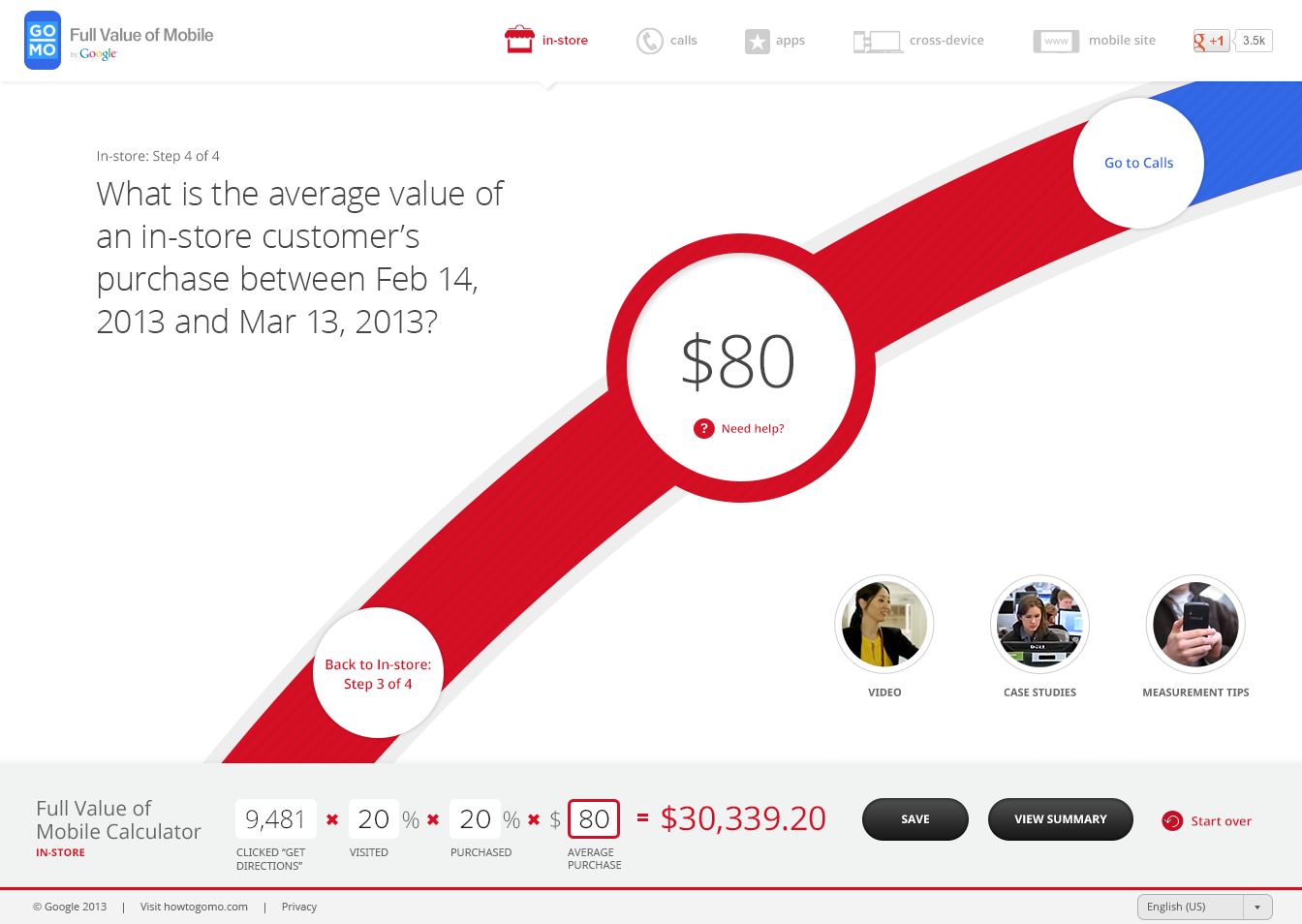
The Full Value of Mobile: New calculator and resources to estimate mobile’s value for your business in the new, multi-screen world

Posted on 06:02 by Unknown
We live in a world of constant connectivity, where mobility is bridging the digital and physical worlds. With smartphones in hand, people are taking a variety of online and offline actions, like calling a business, downloading an app, looking for directions to a store, or starting research that leads to a purchase on another device. We’re working hard to account for these new paths to purchase in AdWords, like the recent addition of calls as conversions to AdWords reporting. Still, with more work to be done to improve measurement tools, most marketers still account only for sales happening on a mobile site and aren’t seeing the full picture. Today we’re introducing the Full Value of Mobile initiative to help marketers begin this discussion and better understand mobile’s impact online and offline. 

This new consumer behavior is now the norm, with a recent study showing that nearly three of ten mobile searches result in visiting a store, calling a business, or making a purchase online. Some smart marketers are already investing in understanding how mobile drives sales through these new customer paths. For example, adidas, in partnership with their agency iProspect, felt that mobile was converting in ways beyond their mobile website, so they created a simple yet powerful attribution model to understand how mobile is driving customers into stores. As a result, adidas found that each click on their store locator button was worth $3.20, which has changed the way they view their digital investment. See their full case study here.  

While savvy marketers like adidas are already defining the full value of mobile, most marketers have struggled to get started. To help marketers better understand mobile attribution, we’re launching the Full Value of Mobile initiative, which includes:

  • A calculator tool
  • Videos that illustrate each mobile conversion path
  • Case studies highlighting successful mobile strategies
  • Tips for measurement

T
he Full Value of Mobile Calculator provides simple equations and benchmarks to help you estimate of the value that mobile drives for your business through calls, apps, in-store, mobile site and cross-device. In about 30 minutes, you can follow the step-by-step wizard to upload data from AdWords and your mobile website, and make some key assumptions to create your Full Value of Mobile estimate. Through the exercise, you’ll see the total value, value per click, and ROI that mobile is driving for your business across all mobile customer paths, not just your mobile website. You’ll also see how cost-effective your mobile CPAs are.


We hope the Full Value of Mobile Calculator helps marketers begin to investigate mobile’s impact online and offline, whether they use it as a directional estimate of mobile’s value or to spark ideas on how to build deeper and more customized models. To learn more about the Full Value of Mobile and how to use the calculator, please join us for a webinar on March 28 at 1pm EDT.  You can sign up here.

Mobility has forever changed the way consumers live and shop, giving rise to these new customer paths as the lines between digital and physical experiences blur. Understanding what each of these mobile pathways means for your business is a critical piece of the larger attribution challenge that every marketer needs to meet head-on. This requires thinking about the full customer journey and acknowledging the interplay between various devices, channels and media influences along the way. Only then can marketers give credit where it’s due – both between and within channels. In other words, rethinking conversion paths is not only key to unlocking the full value of mobile, but also to unlocking the full value of digital.

Posted by Johanna Werther, Head of Mobile Ads Marketing
Read More
Posted in Measurement, Mobile, Multi-Screen | No comments

Wednesday, 20 March 2013

SES New York: Google solutions for a constantly connected world

Posted on 13:02 by Unknown
SES New York is coming up next week, and we hope you’ll join us in the Big Apple!

During day 1 of SES New York, we'll be on the expo floor with a custom-built Google classroom. Join us for a full day of learning about the latest solutions from AdWords, Mobile, Google Display Network, and DoubleClick Search to help you win in a constantly connected world.


Where: SES NY Expo Hall, 5th Floor Marriott Marquee
When: Day 1 - Tuesday, March 26th
Sessions:
  • 10:30-11:30am Reaching customers whenever, wherever, across any device. Surojit Chatterjee, Lead Product Manager for enhanced campaigns
  • 11:45-12:45pm Understanding the Full Value of Mobile. Brendon Kraham, Director, Global Mobile Solutions
  • 2:00-3:00pm Engaging with your audience in a multi-screen world. Speaker TBD
  • 3:30-4:30pm Using DoubleClick Search to manage campaigns across channels and devices. Anthony Chavez, Product Manager for DoubleClick Search
Don’t have a pass yet? Don’t worry! Expo Only passes are free and get you access to our Google classroom. You can also use the code NYGOOGLE which is redeemable for up to $700.00 off a full conference pass!

Posted By Derrick Djang, Product Marketing Manager, AdWords
Read More
Posted in DoubleClick for Advertisers, enhanced campaigns, Events, Mobile, Multi-Screen | No comments

Monday, 18 March 2013

New ValueTrack parameters for enhanced campaigns: managing keyword level URLs by device

Posted on 11:59 by Unknown
In a multi-screen world, it’s increasingly important for advertisers to show relevant ads based on a user’s context: location, time of day, and device. We launched enhanced campaigns to help advertisers take full advantage of user context, maximizing the effectiveness of their ad campaigns.

We’ve been listening to your feedback, and in the next few weeks we’ll be launching new ValueTrack features for advertisers using keyword level URLs.  These features will help advertisers achieve specific conversion and ROI goals, and make the upgrade to enhanced campaigns easier by:
  1. Directing users to a device-specific landing page at the keyword level.
  2. Enabling measurement of the effectiveness of campaigns by device.
What’s new

We’ve added a new parameter, {ifnotmobile:[value]}, where you can replace [value] with text that will then show up in your URL when the user clicks on your ad from a computer or tablet. We’re also changing the existing ValueTrack parameter {ifmobile:[value]}.  This parameter will now insert the specified value into the URL only if the user clicks from a mobile device.

In this post, we will discuss using the ifmobile and ifnotmobile parameters to direct users to a device-specific landing page.  We will also discuss performance tracking by device, and how the ifmobile and ifnotmobile parameters differ from the existing device parameter.

Example 1: Redirecting users to device-specific landing pages

Responsive web design is often a good fit for advertisers who provide device-optimized experiences to their users. If you must specify different landing pages depending on device, you have two options. If the landing page varies by creative, you can simply create mobile-optimized ads by setting the device preference to “Mobile.”  If the device-specific landing page varies for each keyword, then you can use the ifmobile and ifnotmobile parameters in the keyword-level destination URL.  It is important to remember that if you are using the ifmobile parameter today, it will no longer insert a value into the URL for tablet clicks.  The new parameter ifnotmobile will now insert a value into the URL for tablet and desktop/laptop.

Let’s say you want to send mobile users to "m.example.com/widgets," and desktop and tablet users to "www.example.com/widgets" for the keyword “widgets.”  In this scenario you could set the destination URL for this keyword to:

{ifmobile:m.example.com/widgets}{ifnotmobile:www.example.com/widgets}

Example 2: Tracking performance by device

If you want to track performance by device, the existing device parameter will work for most cases.  Using device inserts an “m”, “t”, or “c” into the destination URL, depending on whether the user clicked from a mobile device, tablet, or desktop/laptop computer. If your tracking system requires different internal ids for the same keyword on different devices, then you may need to use the ifmobile and ifnotmobile parameters.

For the keyword “widgets”, let’s say you have assigned an internal keyword id of “df32” for desktops and tablets and “df33” for mobile devices. You can set the keyword-level destination URL to:

www.example.com/widgets?kwid={ifnotmobile:df32}{ifmobile:df33}

Then, if the user clicks from a desktop or tablet, the landing page is:

  www.example.com/widgets?kwid=df32

and for a mobile click:

www.example.com/widgets?kwid=df33

Success in action

Advertisers are upgrading to enhanced campaigns and seeing strong results.  VivaStreet in France, the 4th largest free classified website in the world, upgraded all of their campaigns within the two weeks after launch.  When they upgraded, they increased their mobile bid adjustment to 125% and saw overall conversions increase by 34%.  After seeing the positive results, VivaStreet went on to increase their mobile bid adjustment to 140%.  By using ValueTrack parameters, you can also direct users to device-specific content and measure the effect it has on conversions.

We appreciate the feedback we have received on enhanced campaigns and encourage you to continue helping us understand how to make a great product.  Please join us on March 21st at 10:00AM PST (1:00PM EST) for the latest in our enhanced campaigns webinar series, EC 205, covering enhanced campaigns and the Google Display Network.

Posted by Karen Yao, Senior Product Manager, AdWords
Read More
Posted in enhanced campaigns, Mobile, Multi-Screen, Updates, ValueTrack | No comments
Older Posts Home
Subscribe to: Posts (Atom)

Popular Posts

  • Understanding the full value of mobile: adidas and RadioShack drive in-store traffic with mobile
    We live in a multi-screen world where people are constantly connected and moving seamlessly across devices. Not only do mobile devices keep ...
  • Understanding Impact with Earned Actions in AdWords for video
    For many video advertisers, the benefit of TrueView only begins with the first view. Just as an Honest Trailers link pinged to a friend can...
  • AdWords system maintenance today
    Our AdWords engineering team is conducting planned system maintenance today starting around 10:00 am Pacific Daylight Time (17:00 GMT). We ...
  • 3 Ways to Measure More Conversions Using Estimated Total Conversions
    In October, we announced Estimated Total Conversions as a first step to providing you with a more holistic view of the conversions driven b...
  • Celebrate the best in digital creativity with Google+ at Internet Week New York and the Webby Awards
    Once again, Internet Week New York is in full force, and we hope that you'll come and join Google+ for some of the festivities as the c...
  • Connect, Click and Convert Around the World with Google Shopping
    On June 11th, Google Shopping will complete the transition to a commercial model in the United Kingdom, Germany, France, Japan, Italy, Spain...
  • Resources for driving your business forward with Google+
    When we launched Google+ your Business, we wanted to give you a collection of tools and products to help you make lasting connections with ...
  • AdWords Hangout-on-air: Boosting your AdWords campaign with Dynamic Search Ads
    Dynamic Search Ads are an efficient new way to target relevant searches with ads generated directly from your website. They generate increm...
  • Impression Share Updates Rolling out Globally
    Starting today, we will begin rolling out updates to your Impression Share metrics , which include new ad group-level impression share metri...
  • Google Partners Goes Global: Empowering agencies with new leads, new tools, new opportunities
    Google is committed to making the web work for you. That’s why we’re proud to announce the worldwide launch of Google Partners – a platform...

Categories

  • #decemberadventure
  • +1
  • account management
  • Account Security
  • Ad Approvals
  • Ad Formats
  • Ad Innovations
  • Ad Rank
  • ad rotation
  • ad traffic quality
  • Ads Preferences Manager
  • Ads quality
  • ads showcase
  • AdSense
  • Advertising Week
  • adwords
  • AdWords Community
  • AdWords Editor
  • AdWords Examples
  • adwords experts
  • AdWords Express
  • AdWords for video
  • AdWords Help Center
  • AdWords Online Classroom
  • adwords support
  • Agency Blog
  • android
  • Announcements
  • apps
  • Audience Targeting
  • Automated Rules
  • Automotive
  • Best practices
  • bid manager
  • Bidding
  • Billing
  • Brand
  • Browsers
  • Budgets
  • Bulk Actions
  • Campaign management
  • Campaign Targeting
  • Case studies
  • Change log
  • Channel Intelligence
  • Chris Brogan
  • Conversion Optimizer
  • Conversion Tracking
  • Conversions
  • Creative Sandbox
  • Destination URL
  • Display
  • Display Ads
  • Display Network
  • Display URL
  • DoubleClick for Advertisers
  • doubleclick search
  • Dynamic search ads
  • Enabling better decisions
  • enhanced campaigns
  • Enhanced CPC
  • Events
  • Extensions
  • floodlight
  • Geo-targeting
  • GoMo
  • Google AdWords Certification Program
  • Google Analytics
  • Google Display Network
  • Google Merchant Center
  • google play
  • Google Shopping
  • Google Trends
  • google+
  • Google+ Pages
  • Hangout on Air
  • Help Desk Hangouts
  • Help Forum
  • html5
  • Impression Share
  • Insights
  • Interest Category Targeting
  • Keywords
  • Landing Page Quality
  • Learn with Google
  • Learning resources
  • local
  • location
  • Location Extensions
  • Location targeting
  • maps
  • Measurement
  • measuremore
  • Mobile
  • mobile sites
  • Multi-Screen
  • My Business Story
  • My Client Center
  • New Ad Formats
  • New features
  • New Interface
  • offer extensions
  • offline results
  • Opportunities tab
  • Optimization
  • pages for businesses
  • Paused Ads
  • placement exclusion lists
  • Policy
  • Product Ads
  • Product Listing Ads
  • Promoted Videos
  • Quality Score
  • Remarketing
  • Reporting
  • Reporting and Analytics
  • research
  • Search Ads
  • Search Engine Strategies conference
  • Search Funnels
  • Seasonal
  • Security
  • shared library
  • sitelinks
  • Smart Phones
  • SMX East
  • Social
  • Success Stories
  • System updates
  • Tablet
  • Targeting
  • Testing opportunities
  • Think Insights
  • Think Marketing
  • Think With Google
  • Tips
  • Tools
  • Top Contributors
  • top of page bid estimates
  • Tracking
  • TrueView
  • TV Ads
  • Updates
  • User Experience
  • ValueTrack
  • Webinars
  • YouTube

Blog Archive

  • ▼  2013 (162)
    • ▼  December (5)
      • Engagement Ads for Everyone
      • Redefining "Advertising": How 2013 Transformed Dig...
      • Just in time for the holidays — viewability across...
      • Understanding Impact with Earned Actions in AdWord...
      • 3 Ways to Measure More Conversions Using Estimated...
    • ►  November (15)
    • ►  October (11)
    • ►  September (7)
    • ►  August (12)
    • ►  July (11)
    • ►  June (20)
    • ►  May (29)
    • ►  April (11)
    • ►  March (16)
    • ►  February (17)
    • ►  January (8)
  • ►  2012 (182)
    • ►  December (10)
    • ►  November (18)
    • ►  October (18)
    • ►  September (20)
    • ►  August (13)
    • ►  July (10)
    • ►  June (25)
    • ►  May (17)
    • ►  April (17)
    • ►  March (17)
    • ►  February (11)
    • ►  January (6)
  • ►  2011 (156)
    • ►  December (11)
    • ►  November (18)
    • ►  October (13)
    • ►  September (8)
    • ►  August (10)
    • ►  July (10)
    • ►  June (20)
    • ►  May (17)
    • ►  April (15)
    • ►  March (17)
    • ►  February (16)
    • ►  January (1)
Powered by Blogger.

About Me

Unknown
View my complete profile